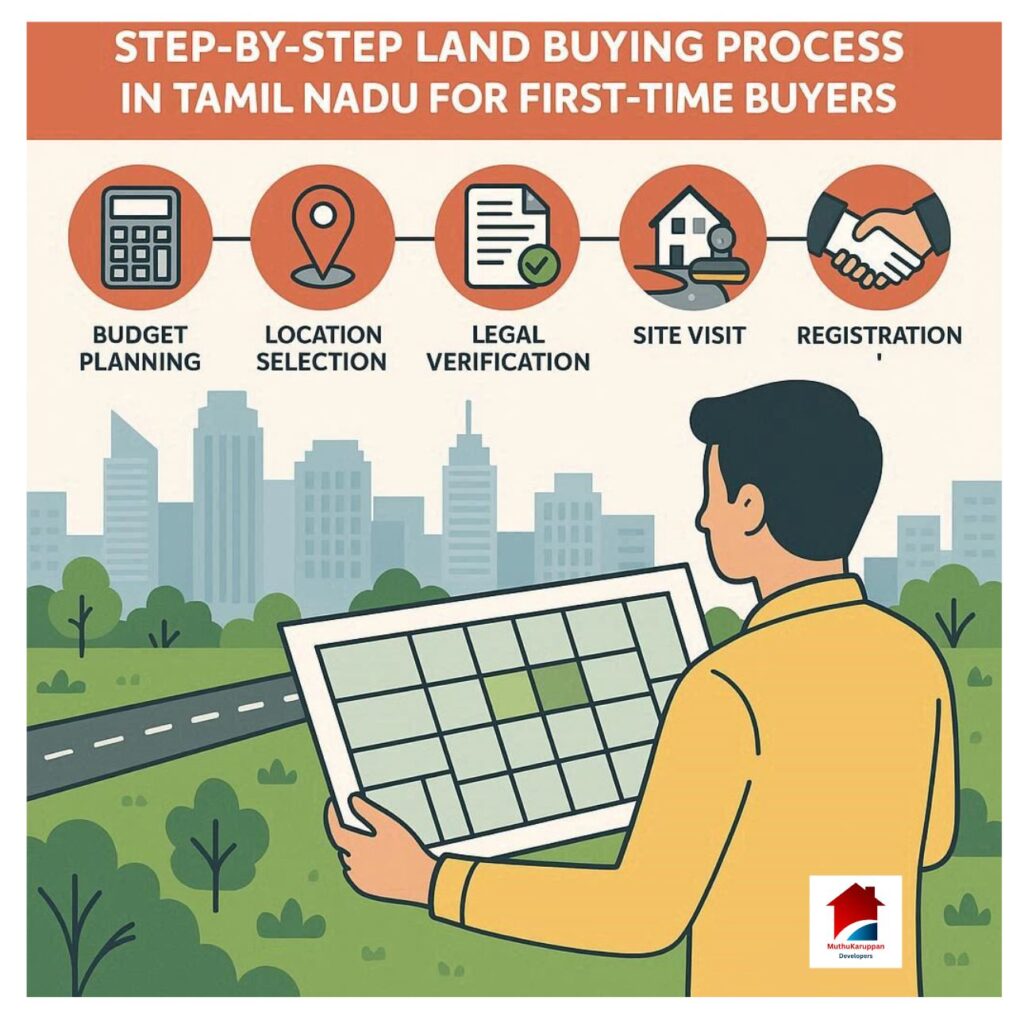
Buying land for the first time can feel overwhelming—especially with legal checks, approvals, and documentation involved. But with the right guidance, it can be one of the safest and most rewarding investments you’ll ever make.
In this complete guide, Muthukaruppan Developers walks you through a simple, practical step-by-step process to buy land in Tamil Nadu with confidence.
Why Buying Land is a Smart Investment
Tamil Nadu’s real estate market—especially in cities like Chennai and Coimbatore—is growing rapidly due to infrastructure development, IT expansion, and increasing demand for residential plots.
- High Appreciation Value
Land is a finite resource, and as urban expansion continues, demand keeps rising. Areas on the outskirts of major cities are witnessing steady price growth, especially near highways, IT corridors, and industrial zones. Early investment in such locations can yield significant returns over time. - No Depreciation Like Buildings
Unlike apartments or villas, land does not lose value due to wear and tear. Buildings may age and require renovation, but the land itself remains valuable and often increases in price regardless of structures built on it. - Ideal for Long-Term Wealth Creation
Land is considered one of the safest investment options in real estate:- Acts as a hedge against inflation
- Requires minimal maintenance
- Can be held for years without additional costs
Over time, it becomes a strong financial asset that can be sold or developed.
- Full Flexibility to Build as Per Your Needs
Buying a plot gives you complete control:- Build your home anytime in the future
- Design according to your preferences
- Convert it into rental property later
- Growing Demand in Emerging Locations
Cities like Tiruchirappalli and Hosur are attracting investors due to affordability and rapid development. As infrastructure improves, these areas are expected to deliver strong returns.
With these advantages, investing in land is not just a purchase—it’s a strategic step toward long-term financial stability and growth
Step 1: Define Your Purpose
Before you start searching, be clear about why you are buying land:
- Investment purpose (long-term resale)
- Building a home
- Rental income through construction later
Your purpose will help you choose the right location, budget, and plot size.
Step 2: Fix Your Budget
Decide how much you are willing to invest, including additional costs:
- Plot cost
- Registration & stamp duty
- Legal charges
- Development charges
💡 Always keep 10–15% extra budget for hidden costs.
Step 3: Choose the Right Location
Location is the most critical factor in land investment.
Key things to check:
- Connectivity to main roads & highways
- Nearby schools, hospitals, transport
- Future development plans
- Demand in the area
Top growing cities include:
- Tiruchirappalli
- Madurai
- Hosur
Step 4: Verify Legal Documents
This is where most first-time buyers make mistakes—don’t skip it.
Essential documents to check:
- Patta (Ownership Proof)
- Encumbrance Certificate (EC) – confirms no legal dues
- Parent Documents (previous ownership history)
- Sale Deed
✔ Ensure the land has a clear title with no disputes.
Step 5: Check DTCP / CMDA Approval
Approvals ensure your plot is legally valid and safe to buy.
- CMDA Approval – required in Chennai
- DTCP Approval – required for other Tamil Nadu regions
Why it matters:
- Ensures proper layout planning
- Helps in getting bank loans
- Increases resale value
Step 6: Visit the Site Physically
Never buy land without visiting the location.
During site visit, check:
- Road access and layout quality
- Water availability
- Surrounding developments
- Actual distance from key landmarks
💡 Many buyers regret skipping this step.
Step 7: Evaluate Infrastructure & Future Growth
Look beyond current conditions—focus on future value.
- Upcoming highways or ring roads
- IT parks or industrial zones
- Government development projects
Areas near growth corridors usually see faster appreciation.
Step 8: Negotiate and Finalize the Price
Once satisfied:
- Compare prices with nearby plots
- Negotiate with the seller/developer
- Confirm all inclusions (road, EB, drainage, etc.)
💡 Don’t rush—take time to evaluate the deal.
Step 9: Registration Process
Land registration is done at the Sub-Registrar Office.
Required:
- Original documents
- ID proof
- Stamp duty payment
- Registration charges
After registration, the property is legally transferred to your name.
Step 10: Post-Purchase Formalities
After buying the land:
- Apply for Patta transfer
- Update revenue records
- Secure all documents safely
- Plan for construction or hold for investment
Common Mistakes to Avoid
- ❌ Buying without legal verification
- ❌ Ignoring approvals (DTCP/CMDA)
- ❌ Choosing wrong location
- ❌ Not checking water availability
- ❌ Falling for unusually low prices
Cost Breakdown of Buying Land in Tamil Nadu
Many first-time buyers underestimate the total cost. Here’s a clear breakdown:
- Plot Cost – Base land price
- Stamp Duty – Around 7% in Tamil Nadu
- Registration Charges – Around 4%
- Legal Fees – Advocate/document verification
- Development Charges – Roads, drainage, EB
💡 Tip: Always calculate the total cost, not just land price, before finalizing.
Can You Get a Loan for Buying Land?
Yes, but with conditions:
- Banks provide loans only for DTCP/CMDA approved plots
- Loan amount is usually 50–70% of plot value
- Interest rates are slightly higher than home loans
Documents Required:
- ID proof & address proof
- Income proof
- Property documents
💡 Buying approved plots in cities like Chennai improves loan eligibility.
Important Documents Checklist
Before registration, double-check everything:
- Sale Deed
- Patta
- Encumbrance Certificate (EC)
- Layout Approval Copy
- Parent Documents
✔ Missing even one document can create future legal issues.
Red Flags to Watch Before Buying Land
Avoid these common traps:
- ❌ Very low price compared to market
- ❌ No proper road access
- ❌ Agricultural land sold as residential
- ❌ Missing approvals (DTCP/CMDA)
- ❌ Disputed ownership
💡 If something feels “too good to be true,” it usually is.
Best Time to Buy Land in Tamil Nadu
Timing can impact your returns:
- Buy during early development stages
- Invest near upcoming infrastructure projects
- Avoid peak price zones unless for end-use
Cities like Coimbatore and Tiruchirappalli are currently in growth phase.
Pro Tips for First-Time Buyers
- Start with verified developers only
- Always visit the site physically
- Don’t rush decisions
- Compare at least 3–5 properties
- Take legal opinion before finalizing
Why Choose Muthukaruppan Developers?
At Muthukaruppan Developers, we make land buying simple and secure:
- Legally verified plots
- Prime locations with growth potential
- Transparent pricing
- Complete assistance from site visit to registration
We help first-time buyers make safe and profitable decisions.
Final Thoughts
Buying land in Tamil Nadu doesn’t have to be complicated. By following this step-by-step guide, you can avoid common risks and make a confident investment.
Whether you’re looking in Chennai or emerging cities like Madurai, the key is to focus on legal clarity, location, and long-term value.
Ready to Buy Your First Plot?
Muthukaruppan Developers is here to guide you every step of the way.
- 📞 Call / WhatsApp: +91 9442611433
- 🌐 Visit: https://muthukaruppandevelopers.in/
- 📍 Book a Free Site Visit Today
❓ Frequently Asked Questions (FAQs)
1. Is it safe to buy land in Tamil Nadu for first-time buyers?
Yes, it is safe if you verify all legal documents, ensure the land has a clear title, and check for DTCP or CMDA approval. Buying from trusted developers like Muthukaruppan Developers further reduces risk.
2. What are the important documents required to buy land in Tamil Nadu?
You must verify:
- Sale Deed
- Patta (ownership proof)
- Encumbrance Certificate (EC)
- Parent Documents
- DTCP/CMDA Approval
These documents ensure the land is legally clear and dispute-free.
3. What is the difference between DTCP and CMDA approval?
- DTCP (Directorate of Town and Country Planning) approval is for areas outside metro cities
- CMDA (Chennai Metropolitan Development Authority) approval is for plots within Chennai
Both approvals ensure proper layout planning and legal compliance.
4. Can I get a bank loan to buy a plot in Tamil Nadu?
Yes, banks provide loans for approved plots. However:
- Only DTCP/CMDA approved plots are eligible
- Loan amount is usually 50–70% of plot value
- Interest rates may be slightly higher than home loans
5. How much does it cost to register land in Tamil Nadu?
Registration costs typically include:
- Stamp Duty: ~7%
- Registration Charges: ~4%
These charges are calculated based on the property’s market value.
6. Is it better to buy land or a flat in Tamil Nadu?
Buying land is often better for long-term investment because:
- Land appreciates faster
- No depreciation like buildings
- Flexibility to build anytime
However, flats are suitable for immediate living.
7. Which are the best cities to buy land in Tamil Nadu?
Top investment locations include:
- Chennai
- Coimbatore
- Tiruchirappalli
- Madurai
- Hosur
These cities offer strong growth and future appreciation.
8. How can I verify if a land title is clear?
You can:
- Check Encumbrance Certificate (EC) for 30 years
- Verify parent documents
- Consult a legal expert
- Confirm ownership through Patta
This ensures the land has no legal issues.
9. What mistakes should first-time land buyers avoid?
Avoid these common mistakes:
- Skipping legal verification
- Buying unapproved plots
- Not visiting the site
- Ignoring water availability
- Falling for very low prices
10. How long should I hold land for good returns?
For best returns, hold land for at least 3–5 years, especially in developing areas near infrastructure projects.