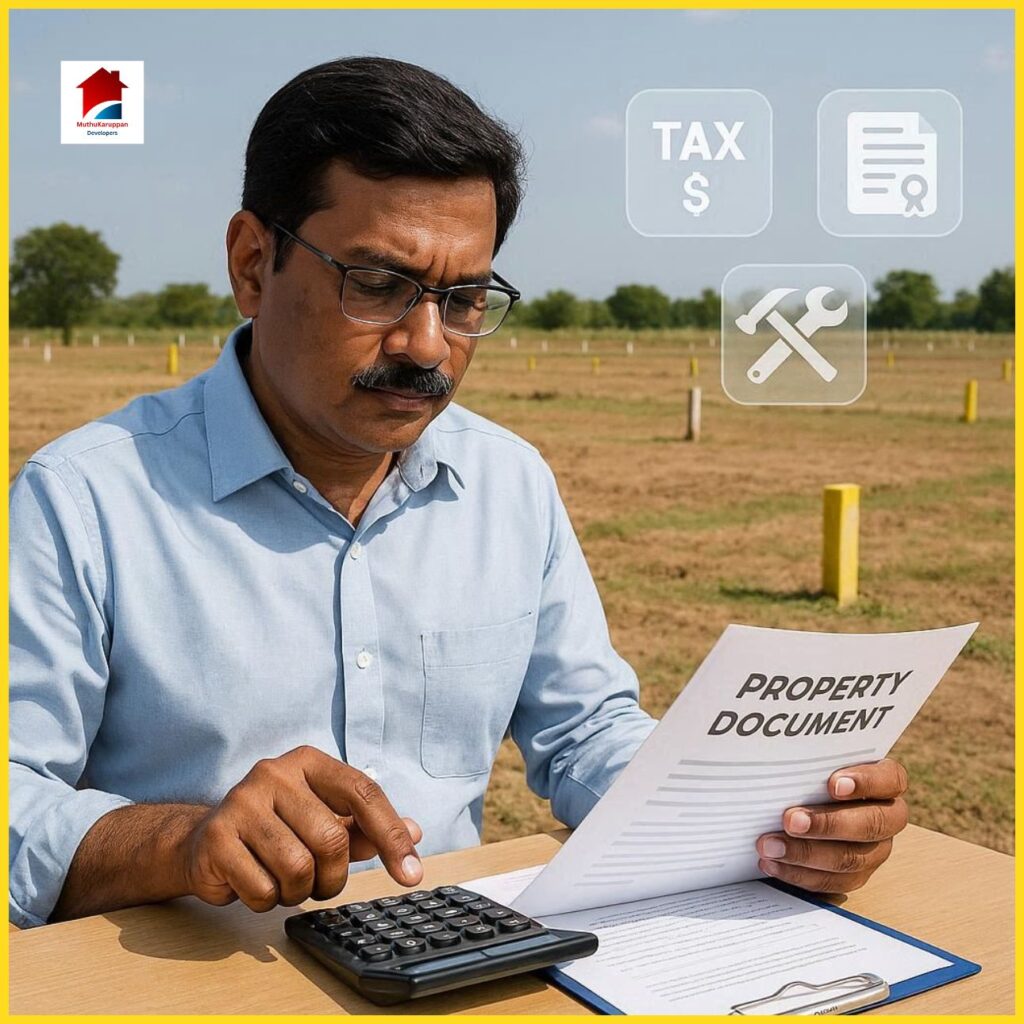
Buying land is often seen as a straightforward investment—pay the price, register the property, and you’re done. But in reality, many buyers in Tamil Nadu end up spending significantly more than they initially planned due to hidden or overlooked costs.
If you’re planning to invest in land, especially for building a home or long-term appreciation, understanding these additional expenses can save you from financial surprises. Here’s a complete breakdown to help you plan better.
🧾 1. Stamp Duty and Registration Charges
One of the biggest mandatory expenses when purchasing land is government charges.
- Stamp Duty: Typically around 7% of the property value
- Registration Fee: Around 4%
👉 Combined, you may pay 10–11% extra on top of the land cost.
💡 Tip: Always calculate this before finalizing your budget.
📊 2. Guideline Value vs Market Value Difference
In Tamil Nadu, land transactions are based on guideline value, but actual market prices are often higher.
- If you buy above guideline value, your registration cost may increase.
- Some transactions involve partial cash components, which can create legal and financial risks.
💡 Smart Move: Choose transparent deals with full documentation.
🏗️ 3. Land Conversion Charges (If Applicable)
If you’re buying agricultural land but planning to build:
- You may need to convert it into residential land (DTCP/CMDA approval)
- This involves additional fees, paperwork, and time
💡 Avoid hassle: Prefer approved plots from trusted developers.
🛣️ 4. Infrastructure and Development Charges
Some plots—especially in gated communities—include hidden development costs:
- Road laying
- Drainage systems
- Street lighting
- Water pipelines
These may be charged separately or included at a premium price.
💡 Always ask: What exactly is included in the quoted price?
⚖️ 5. Legal Verification Costs
Before purchasing, verifying land documents is critical.
- Lawyer fees for title verification
- Encumbrance Certificate (EC) checks
- Patta and Chitta validation
💸 These costs may seem small but are essential for a safe investment.
💡 Never skip this step, even if it adds to your expenses.
🏡 6. Brokerage or Agent Commission
If you go through a real estate agent:
- Commission is usually 1% to 2% of property value
💡 Alternative: Buying directly from a developer can eliminate this cost.
💧 7. Utility Connection Costs
After buying land, you’ll still need:
- Electricity connection
- Water supply (borewell or municipal)
- Sewage setup
These setup costs can add up quickly, especially in developing areas.
🧱 8. Compound Wall and Site Preparation
To secure your land:
- Building a compound wall
- Clearing land (if uneven or overgrown)
💸 These are often ignored during purchase planning but are necessary.
🏦 9. Loan Processing Fees (If Applicable)
If you’re financing your land purchase:
- Bank processing fees
- Legal and valuation charges
- Documentation fees
💡 These can range from 0.5% to 1% of the loan amount.
🔍 10. Maintenance Charges (For Gated Plots)
Some plotted developments charge:
- Monthly or yearly maintenance
- Security fees
- Common area upkeep
💡 Always check long-term commitments before investing.
🧮 11. Patta Transfer and Name Change Charges
After registration, transferring the Patta to your name is essential.
- Government fees are minimal
- But agents may charge service fees
- Delays can happen if documents are not clear
💡 Important: Without Patta transfer, ownership proof can become complicated later.
🌾 12. Soil Testing and Land Survey Costs
Before construction, checking land quality is important.
- Soil testing ensures the land is suitable for building
- Land survey confirms exact boundaries and avoids disputes
💸 These costs vary but are crucial for long-term safety.
🚧 13. Road Access and Right of Way Issues
Some plots may look attractive but lack proper access roads.
- You may need to pay extra for road access
- Legal disputes can arise if pathways are not clearly documented
💡 Check: Ensure the plot has a clear, legally approved access road.
🧾 14. Hidden Taxes and Local Body Charges
Apart from registration, local authorities may impose:
- Property tax (once registered)
- Panchayat or municipality charges
- Layout approval-related fees
💡 These recurring or one-time charges should be clarified upfront.
⚠️ 15. Resale and Future Conversion Costs
If you plan to sell or convert the land later:
- Additional documentation and legal fees may apply
- Conversion rules may change over time
- Capital gains tax applies on profit
💡 Plan ahead: Consider long-term financial impact, not just purchase cost.
🔐 16. Security and Land Protection Costs
Vacant land is vulnerable to encroachment.
- Security services (in some areas)
- Regular monitoring
- Legal expenses if disputes arise
💡 Investing in early protection avoids bigger problems later.
📍 17. Location-Based Hidden Costs
The area you choose can influence extra expenses:
- Developing areas may need higher setup costs
- Remote locations may lack basic infrastructure
- Travel and accessibility costs increase over time
💡 Balance: Low price vs long-term usability.
✅ Final Thoughts
Buying land in Tamil Nadu is a great investment—but only when you plan beyond the base price. Hidden costs can increase your total expense by 15% to 25% or more if you’re not careful.
At Muthu Karuppan Developers, we believe in complete transparency. Our projects are designed to give you clear pricing, legal security, and ready-to-build plots—so you can invest with confidence.
📞 Thinking of Buying Land?
Get expert guidance and explore legally approved plots with zero hidden surprises.
Muthu Karuppan Developers
Your Trusted Partner in Smart Land Investment
❓ Frequently Asked Questions (FAQ)
1. What are the main hidden costs when buying land in Tamil Nadu?
Apart from the land price, buyers should consider stamp duty, registration fees, legal verification charges, development costs, and utility setup expenses.
2. How much extra should I budget beyond the land cost?
It’s safe to allocate an additional 15% to 25% of the property value to cover all hidden and mandatory expenses.
3. Is Patta transfer mandatory after buying land?
Yes, transferring the Patta to your name is essential for proving legal ownership and avoiding future disputes.
4. Do I need DTCP or CMDA approval for land purchase?
If you plan to build a house, buying approved plots (DTCP/CMDA) is highly recommended to avoid legal and construction issues.
5. Are there ongoing costs after buying land?
Yes, you may need to pay property tax, maintenance charges (for gated communities), and security-related expenses.
6. Can I avoid hidden costs when buying land?
You can minimize risks by choosing transparent developers, verifying documents, and clearly understanding all charges before purchase.
7. Is buying land through a developer better than through an agent?
Buying directly from a trusted developer can reduce brokerage fees and provide better clarity on pricing and approvals.